Disclosure Partner links are marked. We may earn a commission if you use one. It costs you nothing extra and never changes our verdict. How we review
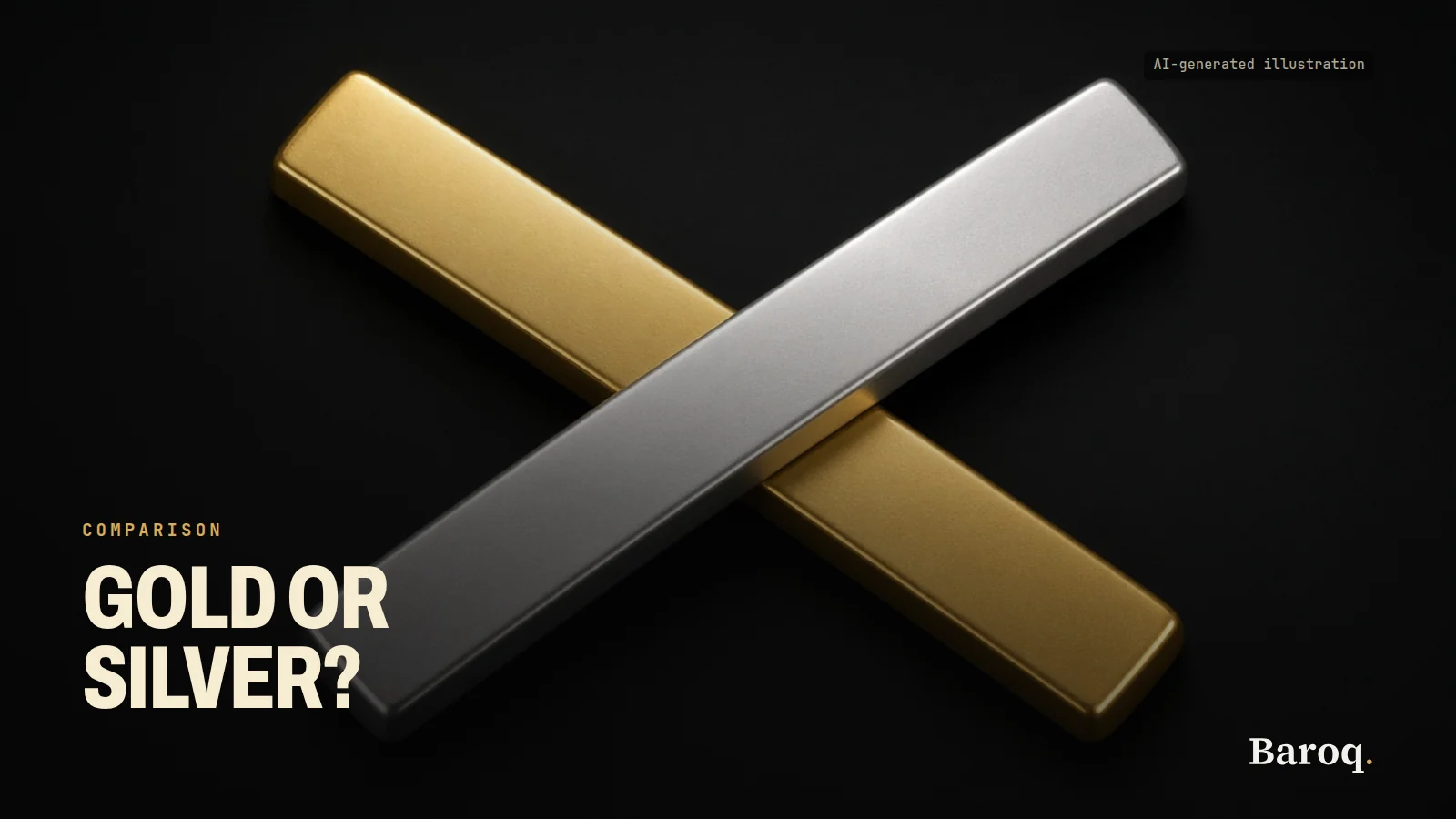
Gold vs silver is the first real choice most precious-metals buyers face. The short answer: gold is the calmer, cheaper-to-hold store of value, and silver is the cheaper-to-enter, harder-swinging metal tied to industry. Most people end up with gold as the core and a smaller slice of silver. This guide shows you how to decide the split for your own money.
Side by side
| Gold | Silver | |
|---|---|---|
| Price swings | Calmer: moves of a few percent in a month are normal | Wilder: often moves one and a half to two times as much as gold |
| What drives demand | Central banks, investors and jewellery | Industry (solar panels, electronics) plus investors |
| Premium over spot | Low on bars and well-known coins | Higher as a share of the price, often much higher |
| Sales tax or VAT | Investment gold is VAT-free across the EU and the UK | Usually taxed in the EU and UK; US rules vary by state |
| Space for the same value | Tiny: a lot of value fits in a small box | Bulky: about 150 times the space of gold at a ratio of 80 |
| Storage and insurance cost | Low per unit of value | Higher per unit of value, because of the bulk |
| Selling small amounts | Easy with small coins and bars | Very easy: one coin is a small sum |
| Entry price | A one-ounce coin is a large purchase | A one-ounce coin costs a small fraction of gold |
- GoldSavers who want a calm store of value, low storage cost and VAT-free buying in Europe.
- SilverBuyers with small budgets who accept bigger swings and want exposure to industrial demand.
How gold and silver are priced
Both metals trade around the clock on a global spot price, quoted per troy ounce (31.1 grams). Every bar or coin you buy is priced from that spot price plus a premium: the cost of refining, minting, shipping, insurance and the dealer's margin. We explain the premium in detail in How to buy physical gold.
The key difference is scale. One ounce of gold costs many times what one ounce of silver costs. That number has a name: the gold to silver ratio, the ounces of silver one ounce of gold buys. Over the last fifty years it has mostly sat between about 40 and 90, and it went above 100 during the market panic of 2020. You can work it out yourself at any moment by dividing the gold price by the silver price on Baroq Markets.
Why it matters: the ratio tells you which metal has been doing better. When it rises, gold is outrunning silver. When it falls, silver is catching up. Some long-term buyers lean towards silver when the ratio is historically high and towards gold when it is low. It is a rule of thumb, not a timing signal, and it can stay stretched for years.
Gold vs silver on price swings
This is the biggest practical difference, and the one that catches new silver buyers out.
Silver usually moves around one and a half to two times as much as gold. In a strong year for metals that feels wonderful. In a weak year silver can fall far further than gold, and stay down longer. There are two reasons:
- A smaller market. Far less money is invested in silver than in gold, so the same flow of buying or selling moves the price further.
- Industrial demand. Around half of all silver goes into industry: solar panels, electronics, electric cars, medical uses. When factories slow down, silver demand slows with them. Gold demand comes mostly from central banks, investors and jewellery, which react differently to a slowdown.
What this means for you: size a silver position so that a fall of a third or more would not force you to sell. If that sounds uncomfortable, hold less silver. The position size calculator is built for trading, but the idea is the same: decide the loss you can live with first, then the amount.
Premiums: where silver costs more than it looks
Silver's low price per ounce hides a cost: the premium is much bigger as a share of what you pay.
Making a one-ounce silver coin costs roughly as much as making a one-ounce gold coin. Spread over a metal worth far less, that cost becomes a large percentage. It is common to pay a premium of a few percent over spot on a one-ounce gold bar, and a premium several times larger, in percentage terms, on a one-ounce silver coin.
Two habits keep the premium down:
- Buy bigger pieces. Ten-ounce and kilo silver bars carry a far lower premium per ounce than single coins. The same is true for gold, which we compare in Gold bars vs gold coins.
- Compare the buy-back price. The real cost of a purchase is the gap between what you pay and what the dealer pays you back on the same day. Ask for both numbers before you order.
Tax: the hidden gap between the two metals
In Europe and the UK this can decide the question on its own.
Investment gold is VAT-free across the European Union and the United Kingdom. Bars and coins that meet the purity rules are bought without sales tax.
Silver usually is not. In the UK, silver bars and coins carry the standard 20% VAT. In most EU countries silver is taxed too, though some coins bought through special schemes are taxed at a lower effective rate. A 20% tax means the silver price has to rise a long way before you are back to even.
In the United States, sales tax on bullion depends on the state: many exempt it, some exempt only purchases above a certain amount, and a few tax it. Capital gains on physical metals can also be taxed differently from shares in several countries, including the US.
Keep every invoice. It is your proof of what you paid and when, and you will need it when you sell. Tax rules change, so check your own country's current rules before a large purchase.
Storage: why silver needs much more room
At a gold to silver ratio of 80, the same amount of money buys 80 times more silver by weight. Silver is also much less dense than gold, so it takes roughly 150 times the space for the same value.
That changes the storage answer:
- At home. A modest amount of gold fits in a small safe. The same value in silver can fill a large one and weighs a lot. Check that your home insurance covers bullion, and up to what limit.
- Bank safe deposit box. Fine for gold. Silver quickly outgrows a standard box.
- Allocated vault storage. Your own bars are held in your name in a professional vault, insured, for a yearly fee. Fees are often charged by value for gold and by value or weight for silver. Ask, because by weight silver costs far more to store.
Selling: which metal is easier to turn back into cash
Both are easy to sell to a reputable dealer. The differences are in the details.
Gold has the edge when you sell a large amount: one small bar or a few coins carry a lot of value, and buy-back spreads on well-known gold products are tight. Silver has the edge when you want to sell a little at a time: one coin is a small sum, so you can raise exactly what you need without breaking up a large bar.
For either metal, well-known national coins and bars from recognised refiners sell fastest and closest to spot. Unusual designs and collector pieces can take longer and fetch less.
How to decide your own split
Work through these four questions in order.
- How big a fall can you sit through? If a 40% drop would make you sell, keep silver small or skip it.
- Where do you live? If you are in the EU or the UK, VAT makes gold much cheaper to buy as an investment.
- How will you store it? If you have limited safe space or a fixed vault fee by weight, gold fits far better.
- How much are you investing? With a small budget, silver lets you start with a single coin and add over time. With a larger budget, gold keeps costs and space low.
A common pattern is mostly gold as the core, plus a smaller silver position for those comfortable with bigger swings. Whatever split you choose, write it down before you buy, and rebalance by buying the metal that has fallen behind, not by chasing the one that has just jumped.
Gold vs silver: the short checklist
- Check both live prices and the gold to silver ratio on Baroq Markets.
- Decide your split and the largest fall you can accept.
- Check the VAT or sales tax rules where you live.
- Choose storage first, then the bar or coin sizes that fit it.
- Compare the premium and the buy-back price at two dealers, then keep every invoice.
New to buying metal? Start with How to buy physical gold, then compare formats in Gold bars vs gold coins.
Educational content, not financial advice. Prices, fees and offers change: check them on the provider's own site before you sign up. Trading leveraged products carries a high risk of losing money, and you can lose all of it.