Disclosure Partner links are marked. We may earn a commission if you use one. It costs you nothing extra and never changes our verdict. How we review
The best online gold dealers are the ones that show you the full delivered price, buy the metal back on published terms and ship it insured to your door. Big names differ less on the headline price than on the details: payment fees, signature rules, cancellation costs and storage. This guide shows you what to compare and how three well-known dealers handle each point, using only their own official pages.
Silver Gold BullPartner is the only dealer this guide links to. That link is an affiliate link. We may earn a commission if you use it. It did not change the facts in the table below: every figure comes from each dealer's own pages.
Side by side
| Silver Gold Bull | APMEX | JM Bullion | |
|---|---|---|---|
| Discount for paying by bank | 4% off for eCheck, cheque or wire; card and PayPal pay the full price | Listed prices already include a 4% discount for paper check, eCheck or wire; card, PayPal and crypto pay 4% more | Card and PayPal prices are 4% higher than check, ACH or wire |
| Card and PayPal limits | Up to $10,000 per order | Accepted on orders up to $500,000; PayPal only for US addresses in US dollars | Card and PayPal orders up to $250,000 |
| Shipping on a purchase (US) | Free on orders over $199; $9.95 below that | Free on domestic orders over $199; $9.95 below that | Free shipping on orders of $199 or more, per its site banner |
| Insurance and signature | Fully insured; a signature is needed for every delivery | Insured in transit; a signature is optional and can be added at checkout | Insured by a third party until the parcel is signed for or confirmed delivered |
| Time to report a problem | Damage within 24 hours of delivery | Report within 48 hours; tampering within 2 business days | Contact it right away; inspect the parcel before signing |
| Buy-back prices | Published per product on its Sell to Us page | Instant quote online or an offer within two business hours; $1,000 minimum sale | Published buy prices for popular products; lock a price online at any hour |
| Shipping when you sell | You pay, and the cost can come off your payment | Prepaid insured labels; the label cost comes off your payment | Labels can be provided, or you ship on your own |
| Cancelling an order | $50 fee plus any market loss | Market loss plus the greater of $50 or 5% of the order | Confirmed orders cannot be cancelled; before shipping you can offset the order and pay any market loss |
| Storage | Allocated, segregated vaults in four countries; storage fee given on request | Through Citadel, its own storage company | Through TDS Vaults, with a published fee table by location |
- Silver Gold BullSilver Gold Bull: buyers in Canada and the US who want published buy-back prices, signed and insured delivery, or allocated vault storage in several countries.
- APMEXAPMEX: buyers who want a very large catalogue, optional signature at checkout and a fast online quote when they sell.
- JM BullionJM Bullion: buyers who want storage fees they can read before they sign up, or to lock a sell price online at any hour.
How do you compare online gold dealers on price?
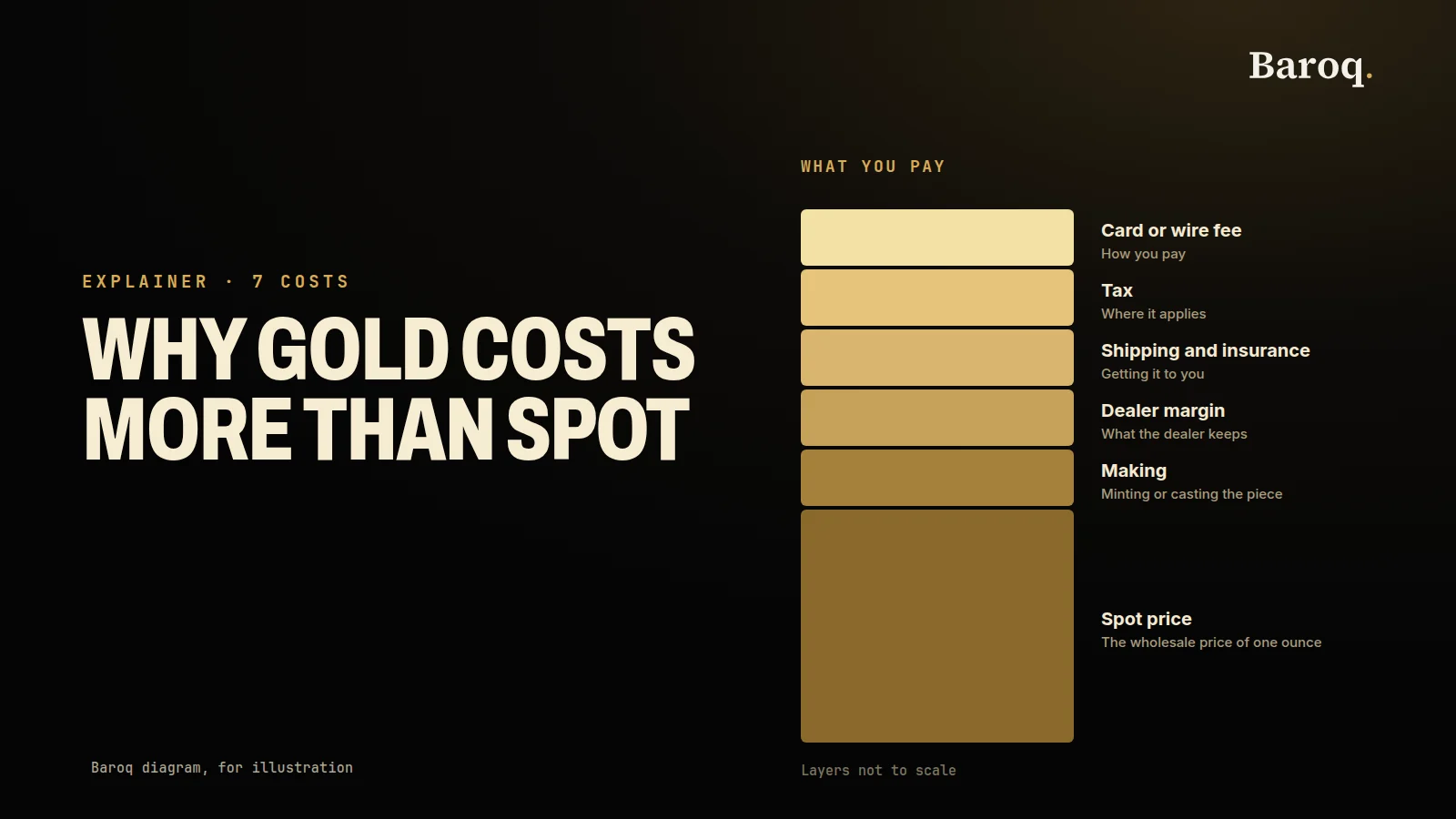
You compare online gold dealers on the premium, the amount you pay above the spot price for the exact product, after fees and shipping. Spot is the live wholesale price of an ounce of gold. Every coin and bar sells above it, because minting, shipping, insurance and the dealer's margin all cost money.
Two dealers can show the same spot price and still charge you different amounts. One may show a bank-transfer price and add 4% for cards. Another may charge shipping below a set order size. To compare fairly, put the same product in the basket at each dealer, on the same day, with the payment method you will really use, and note the final total. Divide that by the number of ounces and subtract spot: that is your true premium per ounce.
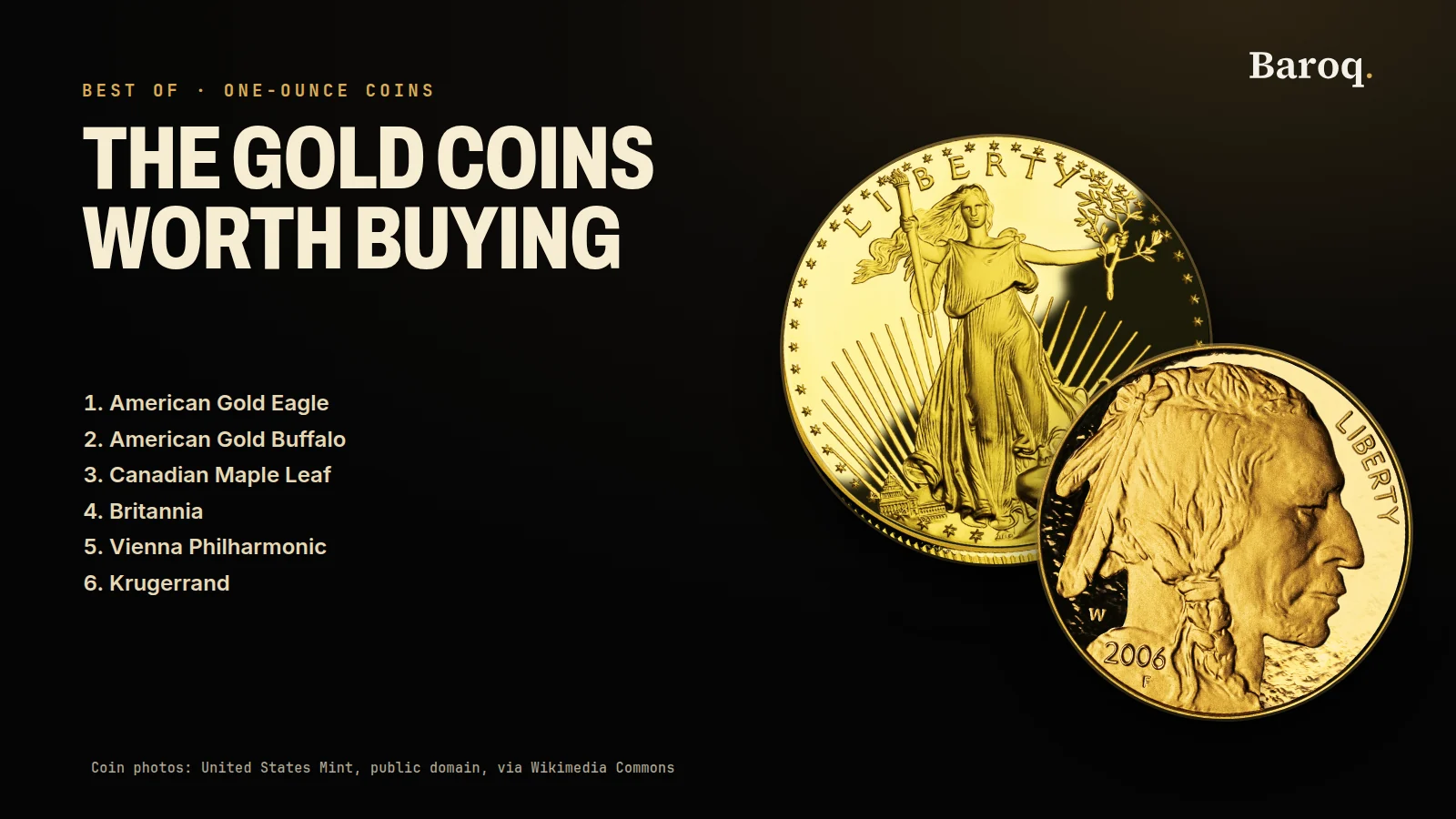
The product matters as much as the dealer. Large bars and widely traded one-ounce coins usually carry lower premiums than fractional coins or collector pieces, and they are also easier to sell later. Our guide to the best gold coins compares the main one-ounce coins, and gold spot vs retail price walks through the premium maths step by step.
What buy-back policy should a gold dealer have?
A good gold dealer publishes how it buys metal back, who pays the shipping and how fast it pays you. Buying is only half of the trade. When you sell, the dealer's bid price, the cost of sending the parcel and any minimum order decide how much of your money comes back.
Here is what the three dealers say on their own pages:
- Silver Gold Bull shows a buy price for each product on its Sell to Us page. Its terms of sale say the seller pays shipping, which can be taken from the payment.
- APMEX gives an instant online quote or an offer within two business hours, with a $1,000 minimum sale. It sends prepaid insured labels and takes the label cost off your payment. Its selling page says payment is issued by the next business day once the metal arrives as described and is authenticated.
- JM Bullion lists buy prices for its popular products and lets you lock a price online at any hour. It can send you a shipping label, or you can ship on your own.
Before you buy, look up the current buy price for the product you want. The gap between the selling price and the buy-back price is the real cost of a round trip.
Does the payment method change the price of gold online?
Yes: at all three dealers we checked, paying by card or PayPal costs about 4% more than paying by bank. On an order of a few thousand dollars, that difference is often larger than the price gap between the dealers themselves.
Silver Gold Bull gives 4% off for eCheck, cheque and wire, and caps card and PayPal orders at $10,000. APMEX's listed prices already include a 4% cash discount, and card, PayPal and crypto pay the higher price. JM Bullion shows card and PayPal prices 4% above check, ACH and wire, and accepts card orders up to $250,000.
Bank payments are slower. A wire usually clears fastest. A mailed cheque takes days, and the dealer may hold the order until the money arrives. Read each dealer's payment page for the deadline to send funds: if the payment is late, the order can be cancelled and you may owe the market loss.
How are gold shipments insured and delivered?
Reputable online gold dealers insure every parcel until it is delivered, ship in plain packaging and track it from door to door. The details that differ are signature rules, the free-shipping threshold and how fast you must report a problem.
Silver Gold Bull and APMEX both list free shipping on orders over $199 and $9.95 below that. JM Bullion's site banner shows free shipping on orders of $199 or more. Silver Gold Bull requires a signature on every delivery. APMEX makes a signature optional and lets you add it at checkout. JM Bullion says its third-party insurance ends when the parcel is signed for or marked as delivered.
Open the parcel on camera if you can, and check the contents against the invoice the same day. Silver Gold Bull asks for damage reports within 24 hours. APMEX asks for reports within 48 hours and tampering claims within two business days. Missing those windows can make a claim harder.
Where should you store gold bought online?
You can keep gold at home, in a bank safe deposit box, or in a vault that the dealer arranges, and each choice changes your total cost. Home storage is free but needs a safe, discretion and a check of your home insurance. Our guide on how to store gold at home covers safes, insurance and hiding spots.
Vault storage moves the risk to a specialist, for a yearly fee. All three dealers offer it. Silver Gold Bull stores metal as allocated and segregated, in vaults in four countries, and gives the fee on request. APMEX works through Citadel, its own storage company. JM Bullion uses TDS Vaults and publishes a fee table by location.
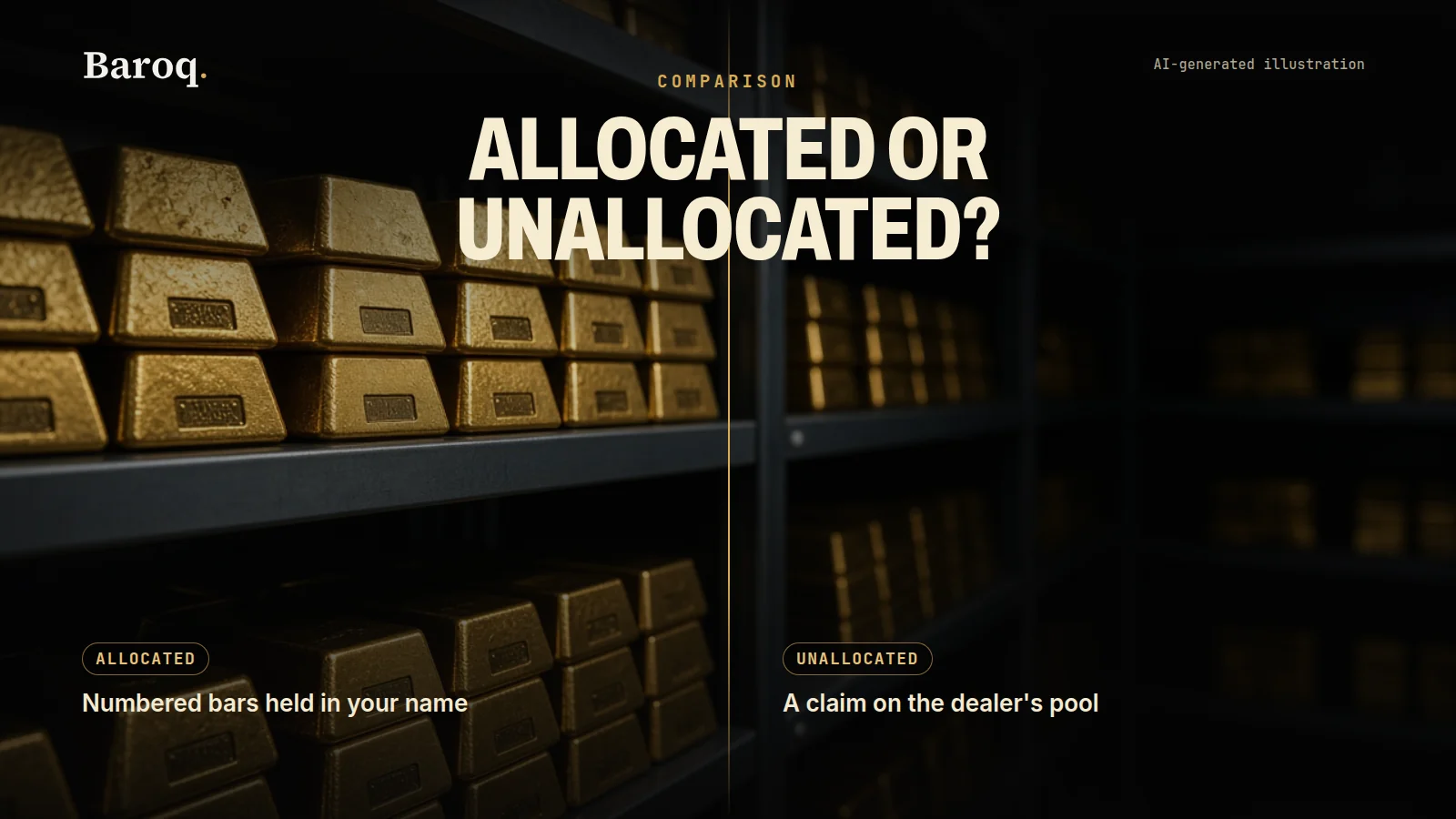
Ask whether your metal is allocated, meaning specific bars or coins are held in your name, or pooled with others. The difference matters if the storage company ever fails. Our guide to allocated vs unallocated gold explains what to ask before you sign.
How do you check an online gold dealer's reputation?
Check how long the dealer has traded, what its terms actually say and how it handles complaints, not just its star rating. A long track record and clear, published policies are the best early signs.
Start with the basics. Find the company's legal name, address and phone number on the site, and make sure you can reach a person. Read the terms of sale, the shipping page and the buy-back page, and note anything that is missing. Search the company name with "complaint" and read how problems were resolved. Look for listings with the Better Business Bureau in the US or Canada. Finally, place a small first order and see how the dealer handles payment, tracking and delivery before you send a large amount.
What are the red flags when buying gold online?
The clearest red flag is pressure: a seller who pushes you to act fast, calls you unasked, or promises gold can only rise. The Baroq data has a fraud advisory on precious metals that lists exactly these tactics.
Watch for these signs:
- A salesperson who calls you, rather than you finding the dealer yourself.
- Claims of limited supply, or a reason you must sign today.
- Claims that news everyone already knows means the price must rise.
- Deals where you pay a small part of the price and the seller arranges a loan for the rest.
- Storage you cannot verify, with no named vault and no statement of your holdings.
- Prices far below every other dealer for the same coin or bar.
- No clear buy-back policy, or vague answers about fees.
The Baroq data suggests checking a company's registration and history with it or the National Futures Association before you hand over money. If something feels off, walk away. A real dealer will still be there next week.
Is Silver Gold Bull a good choice for buying gold online?
Silver Gold Bull is a solid option for buyers in Canada and the US who value published terms, signed delivery and allocated storage. It also has limits you should know before you order.

What works well:
- Buy prices are published per product on its Sell to Us page, so you can check the round-trip cost before buying.
- Payment terms are clear, with 4% off for bank payments.
- Every delivery is insured and needs a signature.
- Allocated, segregated vault storage in four countries.
- Its "best price" banner is a price-match offer: you can ask it to match a lower price from another dealer under its stated conditions.
What to weigh:
- Storage fees are given on request rather than published.
- Physical delivery is only available in North America; elsewhere you can buy for storage only.
- Card and PayPal orders are capped at $10,000 and do not get the bank-payment discount.
- Orders are binding: cancelling costs $50 plus any market loss.
- You pay the shipping when you sell or return metal, and returns must be requested within two business days, less any market loss.
If those terms fit how you plan to buy and hold gold, compare its delivered price on your chosen coin or bar with one or two other dealers on the same day.
Which of the best online gold dealers should you choose?
Choose the dealer whose terms fit how you will pay, where you will store the metal and how you might sell it. Use this checklist before every order:
- Put the same coin or bar in the basket at two or three dealers, on the same day.
- Use the payment method you will actually use, and note the final delivered price.
- Look up today's buy-back price for that product and the cost of shipping it back.
- Read the cancellation and late-payment terms.
- Check the signature rules and the deadline to report damage.
- Decide on home or vault storage, and get the storage fee in writing.
- Place a small first order with a dealer that is new to you.
The pages behind this guide, all read on 11 November 2026: Silver Gold Bull's terms of sale, shipping, payment, Sell to Us, storage and About us pages; APMEX's payment FAQ, shipping FAQ, how selling works and user agreement; JM Bullion's payments, shipping, sell to us, storage and terms and conditions pages; and the precious metals fraud advisory. Prices, fees and terms change, so check each page again before you buy.
Educational only, not financial advice; trading involves risk.
Educational content, not financial advice. Prices, fees and offers change: check them on the provider's own site before you sign up. Trading leveraged products carries a high risk of losing money, and you can lose all of it.