Disclosure Partner links are marked. We may earn a commission if you use one. It costs you nothing extra and never changes our verdict. How we review
Learning how to buy physical gold is simple. Buying it well comes down to three numbers most first-time buyers never look at: the premium you pay over the live price, the price the dealer will pay you back, and what it costs to keep the metal safe. Get those right and the rest is paperwork.
What you are actually paying for
Every bar and coin is priced from the live gold price, called spot, plus a premium. The premium pays for refining, minting, shipping, insurance and the dealer's margin. It is the one number you can control.
| Piece | Typical premium | Why |
|---|---|---|
| 1 kg bar | Lowest per ounce | One piece to make, ship and check |
| 1 oz bar | Low to middle | Common size, many refiners |
| 1 oz coin | Middle | Minted, recognised, often legal tender |
| 1 g to 10 g pieces | Highest per ounce | Making costs spread over very little gold |
Premiums move with demand. In a rush they widen; in quiet markets they shrink. That is why the same coin can cost noticeably more in one month than the next while spot barely moves.
Bars or coins
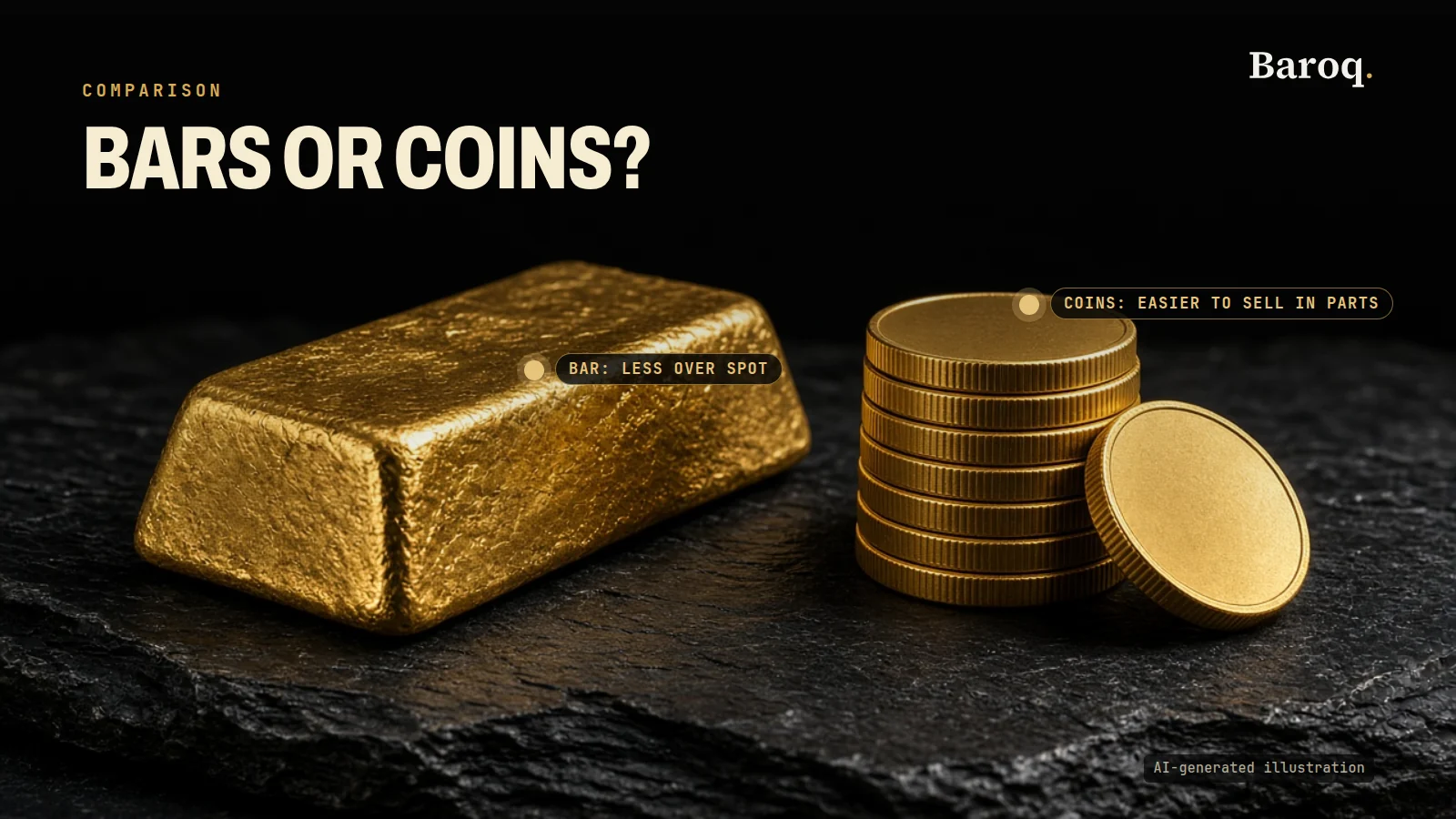
Bars give you the most gold for your money. Coins cost a little more but are recognised by almost every dealer in the world, which helps when you sell. Many buyers hold both: bars for the bulk, a few coins for flexibility. We put them side by side in Gold bars vs gold coins.
How to choose a dealer
A good dealer is boring in the best way. Look for these before you pay anything:
- Live prices on the site, updated through the day, with the premium visible.
- A published buy-back price, so you know what they pay when you sell.
- Products from known refiners and mints, with weight and purity on every listing.
- Insured, tracked delivery, or collection from a vault.
- Real company details: a registered company, an address, a phone line that answers.
Where to keep it
Decide this before you choose the size of your pieces, because it changes the right answer.
- At home. No storage fee and full access, but you need a rated safe, discretion, and home insurance that actually covers bullion.
- Bank safe deposit box. Secure and cheap, but opening hours limit access, and the contents are often not insured by the bank.
- Allocated vault storage. Your specific bars are held in your name in a professional vault, insured, for a yearly fee. Selling can be as simple as a click, because the metal never has to travel.
Avoid unallocated accounts unless you understand them: there you own a claim on gold, not specific bars.
Tax and paperwork
Rules differ by country. Some countries exempt investment-grade gold from sales tax, some treat certain legal-tender coins differently, and some tax gains on physical metal at a different rate from shares. Keep every invoice: it is your proof of what you paid and when.
The ten-minute checklist
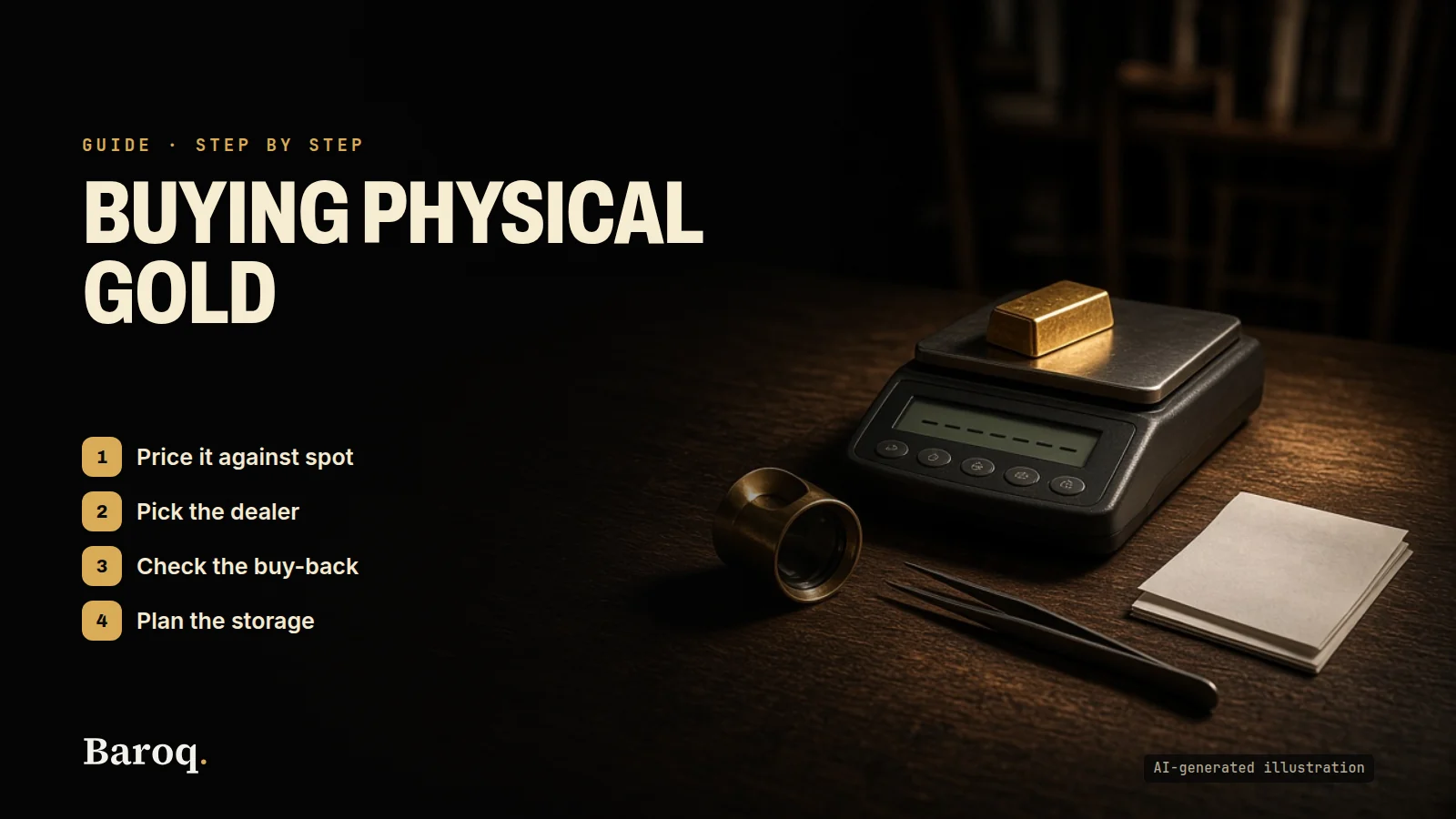
- Check the live spot price on Baroq Markets.
- Pick your storage.
- Pick the piece size that fits it and your budget.
- Compare the premium and the buy-back price at two dealers.
- Pay, and keep the invoice somewhere safe.
Educational content, not financial advice. Prices, fees and offers change: check them on the provider's own site before you sign up. Trading leveraged products carries a high risk of losing money, and you can lose all of it.